Over the past two decades, the Super Bowl, America’s annual championship game and one of the world’s most-watched sporting events, has grown from a niche curiosity into a mainstream cultural moment in the United Kingdom.
What was once primarily seen on late-night TV by hardcore fans has now become an annual date in many Brits’ sporting calendars. Several key developments help explain this increase in enthusiasm.
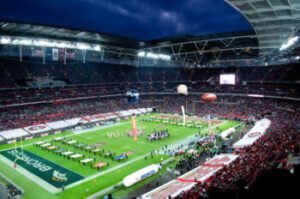
Annual NFL Games on British Soil: Bringing the Sport to Life
A major catalyst for interest has been the NFL’s International Series, which has seen regular-season NFL games played in the UK every year since 2007 (with the exception of 2020, when games were cancelled due to the COVID-19 pandemic).
These fixtures, often hosted at iconic venues such as Wembley Stadium and Tottenham Hotspur Stadium, have given British fans the rare opportunity to watch top-level American football live without travelling to the United States. London has now cemented itself as the NFL’s European hub, with dozens of regular-season games staged there and attendance routinely exceeding tens of thousands.
The presence of these games has transformed many casual viewers into active supporters of specific teams, growing emotional investment in the sport and creating a foundation for broader interest in NFL events like the Super Bowl.
Celebrity Endorsements and Mainstream Visibility
American football’s rising status in the UK hasn’t just been about televised games; it’s also benefited from attention from major British sports personalities.
Figures such as England and Bayern Munich striker Harry Kane have publicly expressed their passion for the NFL, even talking about concepts like “NFL-style playbooks” and entertaining the idea of crossing over into the sport in some capacity later in life.
Similarly, Olympic gold medallist Sam Quek, now a familiar face on British TV, has presented American football coverage and commentary as part of mainstream broadcast packages, helping demystify the sport and make it more accessible to UK audiences.
Such endorsements from high-profile UK athletes have lent credibility to American football and helped bridge the cultural gap between British sports fans and the American gridiron game.
Pubs, Parties, and Cultural Events: Super Bowl Nights in the UK
Britain’s thriving pub culture has played a significant role in popularising the Super Bowl as a social event rather than just a televised game. Bars and pubs across the UK now host Super Bowl nights, complete with themed food, drink promotions, and viewing parties that often draw large crowds. Many people also enjoy betting on NFL games at online sites.
According to industry reports, searches for venues showing NFL games have surged in recent years, and many establishments see substantial trade uplifts during the Super Bowl. This trend has effectively turned what was previously a niche broadcasting moment into a communal celebration that mirrors other major sporting occasions.
The Emergence of Tribal Fan Culture
British sports fans are renowned for their passionate tribal affiliations, something that has historically been most evident in association football (soccer). Over the last two decades, a similar pattern has started to emerge around the NFL: fans in the UK increasingly attach themselves to specific NFL teams, complete with jerseys, chants, and allegiances that feel familiar to soccer supporters.
Social media fan groups, watch parties, and team-focused communities have helped cultivate this sense of loyalty. The result? British interest in the Super Bowl isn’t just passive viewership; it’s part of a broader fan culture that cares deeply about outcomes, rivalries, and narratives.
Growing Participation at the Grassroots Level
Interest in American football in the UK isn’t limited to spectatorship. Participation in the sport at the grassroots level has been on the rise, with more local clubs, amateur leagues, and flag football events attracting players of all ages.
Organisations like the British American Football Association report increased engagement, and youth programmes have introduced the sport to generations who previously had limited exposure beyond TV. This growth of grassroots activity creates a self-reinforcing cycle: as more people play the game, they are more likely to watch and follow the NFL, including its pinnacle event, the Super Bowl.
A Cultural Phenomenon Beyond America
Two decades ago, the Super Bowl was primarily an American cultural export that attracted only the most dedicated overseas fans. Today, it’s a global entertainment event — with millions of UK viewers tuning in for the game, the halftime show, and even the commercials. Increased broadcast coverage and easy access via streaming and TV deals have made the Super Bowl more visible and more engaging than ever before.
The combination of live NFL games in London, mainstream sports personalities championing the sport, social Super Bowl events in pubs, tribal fan loyalties, and growing grassroots participation has helped transform American football from a niche interest into a genuine part of the British sporting landscape.