Wilfrid Smith: From the NFL to Global Recognition

You may have heard of him…

But then again, it’s likely that you have not, but he was one of the most influential men in Chicago sports history, particularly in the National Football League (NFL).

Here was a guy who once tackled Jim Thorpe, was an NFL champion, managed the annual College Football All-Star game in Chicago, traveled almost 20,000 miles for a sporting event, was a prominent NFL referee, and was fondly remembered by the president of the United States.

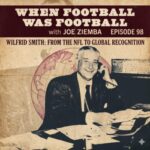
In this episode of “When Football Was Football” on the Sports History Network, we are delighted to bring back the unique life, and amazing accomplishments, of one Wilfrid Russell Smith. Smith was the son of a wandering minister, enjoyed playing sports, and eventually accepted a starting sports writing job for the lofty pay of $10 per week. All three of those influences (travel, sports, and writing) helped Wilfrid to become not only an exceptional pro athlete, but also one of the most recognized and influential sports authorities in the world…and he was never shy about traveling around the globe to cover the next big story!

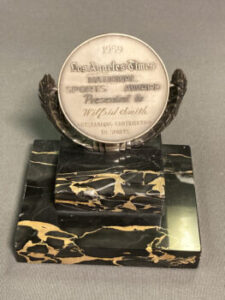
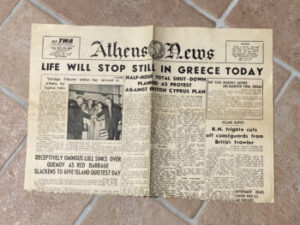
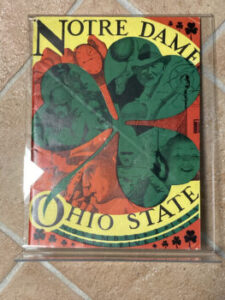
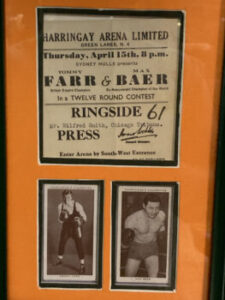
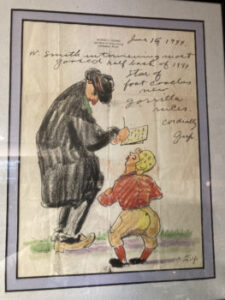
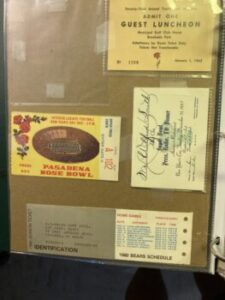
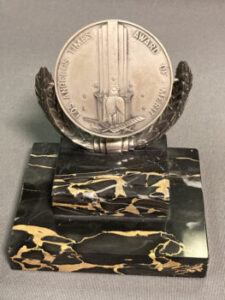
Also on this program, we are honored to share some time with Len Johnson, who owns one of the most significant collections of Wilfrid Smith memorabilia. Len, who lives in the Chicago area, was once at the right place at the right time when he first discovered a veritable treasure chest of Wilfrid Smith artifacts. This is a story that is perhaps hard to believe, but Len will discuss his experiences with us in a few moments.

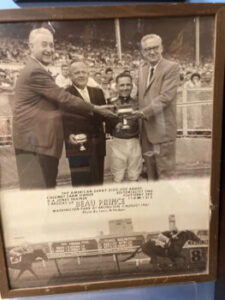
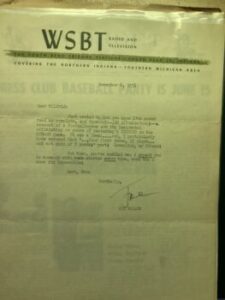
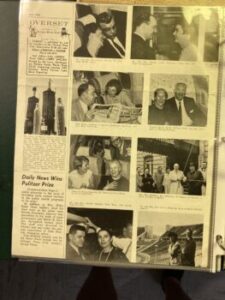
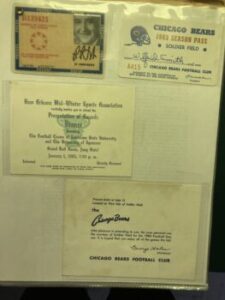
***Most of the photos in this post are from Len’s collection***

But first: who in the heck was Wilfrid Smith?

SMITH PLAYED FOR SIX NFL TEAMS

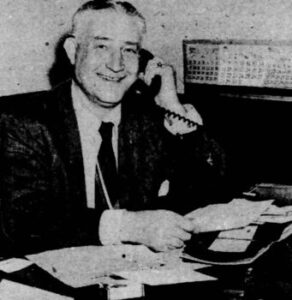
For starters, Smith was a burly 204 lb. lineman for six early NFL teams, including the 1925 NFL champion Chicago Cardinals. He then became, among other things, a journalist, a teacher, and a coach before eventually serving as the sports editor of the powerful Chicago Tribune from 1955 through 1966.

During those various occupations, Smith experienced numerous landmark events that all propelled him into becoming one of the most recognizable sports figures in the world. He retained mementos from nearly all of his athletic escapades and our story will conclude tonight with a very interesting tale about how some of those artifacts from almost 100 years ago were nearly destroyed, but are still around today.

But let’s start at the beginning. Wilfrid Russell Smith was born on April 7, 1899 to Rev. William Smith and his wife Kathryn in Milroy, IN. The minister and his family had lived in several places, but settled briefly in Huntington, IN where Wilfrid quickly became a respected athlete at the local high school.

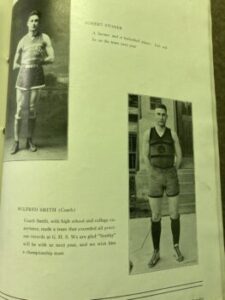
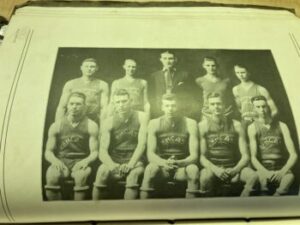
He was talented in football, basketball, and in the classroom, finishing his prep school days in just 3 ½ years despite a grueling academic schedule that included four years of Latin crammed into those 3 ½ years.

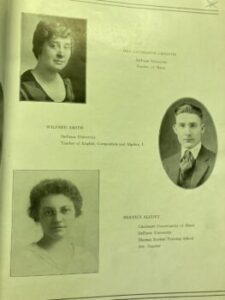
Smith then enrolled at DePauw University (located in Greencastle, IN) in 1915 at a mere 16 years of age and ultimately won letters in football, track, basketball, and baseball. He also became the sports editor of the student newspaper, nicely foreshadowing his future journalistic career.

Credit Chicago Tribune
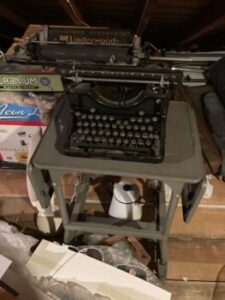
Wilfrid's Typewriter

I COULDN’T USE A TYPEWRITER!

His first essential “paying job” in the newspaper racket was with the Chattanooga (TN) Times in the summer of 1917. By that time, his parents were residing in Chattanooga and Smith visited them on summer vacation from DePauw, while also seeking summer employment.

He stopped by the newspaper office in town inquiring about work and was somewhat surprised to be hired, as Smith recalled later: “The Times’ editor had one good reason for hiring me. I had no experience and couldn’t use a typewriter but I was available. I wasn’t yet in military service [for WW I].” The pay, Smith soon learned, was a lofty $10 per week, but it didn’t matter. He was now in the newspaper business!

Smith continued with the Chattanooga Times during the summers of 1918 and 1919 and earned a much more substantial salary of $20 per week. Following college, Smith was hired as a teacher and coach at Greencastle High School and also flirted with this new athletic opportunity of playing professional football with a club from Pine Village, IN.

Smith agreed to play for the Pine Village crew but neglected to inquire about payment for his services. That was quickly determined after a game with the Dayton Triangles, Smith said: “The owner called me aside after the game and began peeling $10 bills from a roll. When he counted off five, I stopped him. Later it dawned on me that he might have counted to ten!”

Smith was a large and versatile lineman at 6-4, 204 lbs. and ended up playing for six professional teams during his career: Pine Village (1919), the Hammond All-Stars (1919), Muncie Flyers (1920-1921), Louisville Brecks (1922), Hammond Pros (1923), and finally, the Chicago Cardinals from 1923-1925 where the Cards secured the NFL title in that last season. Smith was a personal witness to the early days of the NFL, roaming the Midwest with legends such as Jim Thorpe, Red Grange and George Halas.

NICKNAMED “BIG” SMITH

By 1921, Smith, who was nicknamed “Big Smith” by the local newspapers, moved north to accept the coaching position at East Chicago Washington in Indiana. Note that we used the word “coaching position” instead of “a coaching position.” The reason for this usage is not in error: Smith coached all four sports at Washington as the only coach at the school!

It was difficult, but rewarding work for Smith, as he recalled: “The athletic jobs at East Chicago were challenging because high school programs were in the formative stage in northern Indiana.” From 1921 through 1925, Smith taught and coached at Washington and resided on the south side of Chicago where the commute to nearby East Chicago was made much more convenient by Smith’s treasured Model T Ford.

Chicago Tribune sports columnist David Condon later wrote: ”Each day, Smith throttled his Model T to East Chicago for lengthy teaching and coaching sessions. He throttled back about 6:00 pm to join Paddy Driscoll, Fred Gillies and other Chicago Cardinal teammates at Normal Park for practice sessions that were to culminate in the National Football League championship.” Smith decided to retire from pro football in 1925 and stayed closer to home by moving on to Harrison High School in Chicago.

Despite leaving pro football behind, Smith added more responsibilities by refereeing NFL games on Sundays while also working as the Tribune’s night copy editor beginning in 1925.

FIRST REGULAR PRO FOOTBALL WRITER

In the summer of 1926, Smith moved into a new position that would solidify his career as a journalist. The Tribune’s sports editor Don Maxwell joined Smith for lunch one day and asked Smith: “Now that you aren’t playing pro football, why don’t you write it for the Tribune?

You could give us the same expert coverage that Walter Eckersall gives us in college football.” Smith liked the idea, especially since he could still keep his teaching job at Harrison. He also managed to turn in articles from the games he refereed based on a colleague’s notes! David Condon wrote “The Tribune hired him to be the first writer to be regularly assigned to the embryonic sport [of pro football].” In addition, Smith selected NFL All-Pro teams for the Tribune, a rarity in the 1920s for a sport struggling for acceptance.

By 1930, Smith became the newspaper’s featured sports reporter. The added responsibility finally forced Smith to give up his teaching position at Harrison High School, a job that he truly enjoyed. However, the excitement, the travel, and the perks of the new job thrilled Wilfrid Smith. And this is where his recognition as a national sports figure began to ascend.

ROCKNE FORGOT THAT DAY

His first “out of town” interview took place about 90 miles east in South Bend, IN when he interviewed legendary Notre Dame football coach Knute Rockne. Smith remembered what Rockne “forgot” that day: “I was only a fledgling, but Rock greeted me as an old friend. I’m certain he didn’t remember me as a player on the DePauw basketball team that had beaten his Notre Dame squad many years before!”

From South Bend, Smith began his global odyssey covering sports for the Tribune, referred to as the “World’s Greatest Newspaper.” He traveled to New York to interview Chicago boxer Barney Ross when Ross defended his lightweight title. He was present in Detroit to praise Joe Louis as likely the greatest boxer in Smith’s estimation. Then, in 1935, Smith was on-site in Columbus, OH when the remarkable sprinter Jesse Owens smashed three world records and equaled another in one afternoon.

His journalistic endeavors took Smith to ten different European countries in 1937 to document an International Golden Gloves squad, before returning to Chicago to watch Joe Louis grab the heavyweight title from James J. Braddock on June 22, 1937. By this time, Smith was seemingly everywhere and continued to represent the Tribune at all major sporting events, including the 1948 Olympics where he described how an unsung 17-year-old named Bob Mathias captured the decathlon.

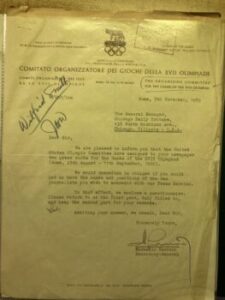
His longest overseas venture was covering the 1956 Olympics in Australia, a round trip of almost 20,000 miles from Chicago! In the time just before the instant and overwhelming access of television, Smith’s astute reporting brought these events to life for millions of readers.

MOST PERFECT PUNCH I’VE EVER SEEN!

In 1952, Smith witnessed one of the greatest boxing comebacks in history when heavyweight Rocky Marciano bounced off the canvass to conquer Joe Walcott. “In the 13th round Marciano, who was trailing on points, caught Wolcott with the most perfect right hand punch I’ve ever seen,” said Smith.

The prose utilized by Smith following the fight accurately captured the essence of Marciano’s victory: “Rocky stood up to Walcott’s attack and the punch that made Marciano champion will be remembered as long as professional fist fighting endures.”

Then, in 1955, Smith was appointed as the sports editor of the Tribune, succeeding Arch Ward, the founder of both the Major League All-Star Game and the College Football All-Star Game. In fact, Smith, working under the guidance of Arch Ward, managed the planning and operation of the College Football All-Star Game during the 1930s when the annual extravaganza was attracting nearly 100,000 spectators. He even officiated the first two games in the series dating back to 1934 and 1935.

When Smith passed away on August 3, 1976, he was mourned throughout the sports world with a Chicago Tribune editorial accurately noting: “Mr. Smith provided Tribune readers with authoritative sports copy by a man versatile as both a writer and an athlete. Inevitably called “Big Smith” in view of his impressive stature, Wilfrid Smith was big in every figurative sense, too. He will always be big in the memories of his innumerable friends and admirers, and in the history of the Tribune.”

Even the President of the United States remembered Wilfrid Smith. President Gerald Ford reminisced about playing in the 1935 College Football All-Star Game in Chicago following his graduation from Michigan. Ford once said: “I played in the all-star game back when the ball was round. Arch Ward [founder of the game] was good to me and I remember Wilfrid Smith [Ward’s successor} too.” Such was the life of Wilfrid Smith…

Share
Tweet
Share
Pin
Email

Author and Host - Joe Ziemba

Joe Ziemba is the host of this show, and he is an author of early football history in the city of Chicago.  Here, you can learn more about Joe and When Football Was Football, including all of the episodes of the podcast.

Joe Ziemba

Joe Ziemba Books

Please Note – As an Amazon Associate I earn from qualifying purchases

Resources

More From When Football Was Football

Leave a Comment