The Super Bowl began as a relatively niche event. It didn’t attract the enormous audience that it does today, and the commercials weren’t seen as appointment viewing. People bet on it, but nowhere near the numbers that have become common in the modern era.
Let’s explore how the Super Bowl evolved from a clash between the two conference champions to the most wagered-upon sporting event in the United States.
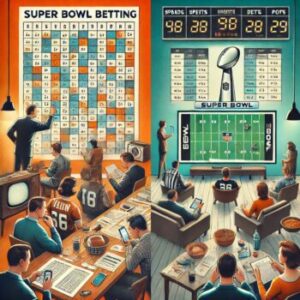
The Early Days: Office Pools and Underground Bookies
In the not-too-distant past, organized sports gambling existed mainly in the shadows. People took part in it, but they couldn’t access a convenient app on their phone, and there certainly weren’t advertisements for prop bets on ESPN, Fox, and other major sports networks.
In the 1960s and 1970s, most Americans who wanted to bet on the Super Bowl could only do so through informal office pools and shady neighborhood bookmakers. Coworkers might throw in a few dollars and pick squares that corresponded to what the score would be at the end of each quarter of play. They might also bet against each other, making simple win-lose wagers that were just as much about bragging rights as the money that was on the line.
While this was going on, illegal bookies handled larger action, often using lines provided by centralized oddsmakers connected to the mob. The look and feel of these operations was much different from the out-in-the-open format that sports betting in the United States has taken today.
The 1980s Brought Significant Changes to Super Bowl Betting
By the 1980s, the game was attracting much more attention. Bigger TV numbers and ad dollars coming in made it a marquee event that prompted watch parties, even for more casual fans.
In addition, Las Vegas sportsbooks began treating the Super Bowl as a can’t-miss event for gamblers. The adjusted spreads being offered were intended to balance the action of Super Bowl matchups that looked lopsided on paper.
National TV coverage and easy‑to‑understand wagering made the Super Bowl a U.S. sports betting centerpiece. However, most of the country still had no legal way to place a wager during this era.
The Las Vegas Era Gave Rise to Prop Bets
By the 1990s, Las Vegas was seen as an adult playground where gamblers sought fame and fortune, as well as the nerve center of Super Bowl betting. Bookmakers had taken to offering an extensive menu of possible bets, including the over/under on each game and futures betting.
Speculative betting, like prop bets, was a natural extension designed to keep fans engaged. As the league’s popularity surged, so did the creativity of the betting menu. Such options as first-score plays and coin toss outcomes began to appear. There were even more obscure betting options, like whether a basketball player would outscore one of the teams in the Super Bowl.
Novelty wagers helped non-sports fans sample gambling without spending big money on it. Casual football watchers who might never risk serious cash could place a small side bet and then watch the game with interest to see whether luck was on their side.
According to Casinos.com, where people look for online casino bonus codes, you can still find that type of low‑stakes betting on today’s digital platforms. On sportsbook apps that you can easily download to your phone, promos and bonuses encourage casual fans to learn about props and wager on them without getting too upset if they lose.
The Betting Explosion That Came with Widespread Legalization
In 2018, sports gambling in the U.S. saw its real inflection point. The Supreme Court struck down the federal ban on sports betting, which opened the door for individual states to make their own decisions on the matter. The more permissive ones were quick to open the doors for legal sports betting in exchange for a taste of the profit from the companies that were given licenses to operate there.
Since then, more than three dozen states have rolled out legal sportsbooks. Mobile apps like FanDuel, DraftKings, and others are major players in this burgeoning market.
The Super Bowl remains the centerpiece attraction. Both casual and dedicated gamblers can wager any amount they want on the money line, the over/under, prop bets, and more.
Viewing Parties Are the Epitome of Fan Culture
One thing that distinguishes the Super Bowl from other sporting events is how accepted wagering on it has become. Despite the legalization and widespread acceptance of sports gambling, some puritans will still frown at the player who mentions they’ve wagered on a midseason baseball or basketball game.
By contrast, putting a couple of dollars on a prop bet like which team will win the coin flip or how many times a celebrity will appear on camera seems perfectly acceptable. These wagers rarely involve large sums, and the communal feel surrounding the wagering makes gamblers feel less ostracized.
Social betting and viewing traditions only increase this effect. The office pools that existed decades ago, where participants pick squares, are still common. Meanwhile, big blowout Super Bowl parties are events where non-football fans can get together, gossip, and discuss the merits of the commercials.
The game has become an excuse to gather, eat, and celebrate. In this sense, what was once merely about crowning a champion is now less of a pure sporting contest and more of a national ritual.
The Super Bowl is an Unofficial American Holiday
The Super Bowl has become more than just a football game; it is now a veritable feast of betting opportunities. It’s wild to see how the informal office pools of the 1960s have become multi‑billion‑dollar legal markets, complete with apps offering hundreds of ways to wager on a single monumental event.
The evolution of Super Bowl wagering neatly marries technology with tradition. The game is a shared national spectacle unlike any other sporting event, and it doesn’t seem likely anything will come along to dethrone it anytime soon.