Missouri’s sports timeline is a layered scrapbook: dusty 19th-century racetracks, high school rivalries that still split towns in half on Friday nights, and minor teams that once made small arenas feel like cathedrals. This article follows that arc in a straight line from early horse racing to school-spirit traditions and the semi-pro stories that deserve more love.
19th-Century Horse Racing Takes Root in Missouri
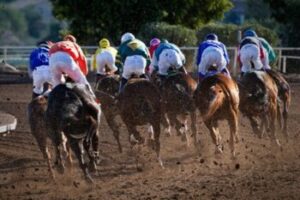
Long before Missouri had major professional franchises, horse racing was already drawing crowds and cash. The sport traveled with settlers, river commerce, and the culture of public competition. By the 19th century, organized races were being staged across the state, turning open land into improvised tracks and race days into community events.
Among the most important milestones was the founding of the St. Louis Jockey Club in 1837, which hosted the first official horse race in Missouri. That single act pushed racing from informal matchups into structured sport, and it made Missouri a real player in America’s early racing map.
St. Charles County and the Prairie-Track Era
St. Charles County stands out as a cradle for Missouri’s earliest racing traditions. In the 19th century, races in this region were often held on “prairie tracks,” natural courses carved out of flat ground near travel routes. These weren’t quiet affairs: people came out for bragging rights, neighbor-to-neighbor wagers, and the thrill of speed in a world where horses were still core transportation.
The St. Charles County races helped normalize the idea that local communities could build a sporting identity around recurring events. Even without grandstands or formal clubhouses, the county’s racing culture fed directly into Missouri’s wider racetrack history.
From Local Contests to Organized Tracks
After the St. Louis Jockey Club launched racing formally in 1837, the state began shifting from scattered contests to organized facilities. Tracks appeared in different cities and towns, creating a loose circuit where horses, riders, and spectators traveled to chase purses and prestige. That organizing impulse mattered because it tied racing to civic pride and local economics.
A strong track meant visitors, business for hotels and taverns, and the kind of excitement that turned ordinary weekends into spectacles. Missouri’s 19th-century racing wasn’t just sport; it was a public gathering point, a marketplace, and a social calendar all rolled into one.
The Mid-20th Century Drop-Off and 1974 Closure
Racing stayed visible through the early 20th century, but momentum slowed in the mid-century as other sports and entertainment options took center stage. Over time, tracks closed or shifted focus, and the live thoroughbred scene lost its base. The turning point came in 1974, when the last live horse racing track in Missouri shut down.
That date marks more than a business closure—it signals the end of an era when racing was an everyday part of Missouri recreation. Still, the sport didn’t vanish from memory; it simply moved into a quieter corner of the state’s sporting identity.
Harness Racing Revival at the Missouri State Fair
Even after the 1974 shutdown, Missouri found a way to keep racing alive in a seasonal, fairground setting. In 1986, the Missouri Horse Racing Commission granted the Missouri State Fair its first pari-mutuel license for 15 days of Standardbred harness racing, running from August 12 to September 1, 1986.
The following year, 1987, the Sedalia Horse Racing Association received a license for 31 days of pari-mutuel harness racing from July 24 to September 7, 1987, again at the Missouri State Fairgrounds. Racing continued through 1988, the final year of that run, held from August 12 to October 16, 1988.
High School Sports as the State’s Main Stage
While horse racing rose and fell, high school sports grew into Missouri’s most dependable sports heartbeat. In many towns, the school team is the closest thing to a shared flag.
Families show up not just for the game, but for each other, for history, and for the chance to feel connected to something bigger than daily routine. Rivalries stretch across decades, with the same matchups replayed every year like a living tradition. Wins become legends; losses become motivation. The culture here isn’t passive—people don’t just watch high school sports in Missouri, they live them.
Rivalries, Legacies, and the Stadium as a Town Square
High school rivalries in Missouri aren’t casual. They’re legacy-heavy events that can define how two communities see each other for generations. Stadiums and fields act like town squares with goalposts, drawing everyone from toddlers to grandparents.
These venues shape local identity because they hold shared memories: playoff runs, bitter losses, senior nights, and the first time a kid wears the school colors under bright lights. A rivalry game isn’t only about points; it’s about who you are, where you’re from, and what your town believes about itself when the stands are full.
Technology Meets Tradition in Modern Fandom
Missouri sports loyalty has always been emotional and local, but modern technology is changing how that devotion manifests. High school games now stream live to alumni scattered across the country, letting former players and parents stay connected to Friday night rivalries decades after graduation.
Social media groups dedicated to Missouri sports history share rare photos of teams like the Missouri River Otters and Carthage Pirates, keeping defunct franchises alive in collective memory. Stats databases let fans track historical records and compare eras, while digital archives preserve game footage and newspaper clippings that once existed only in attics and library basements.
For contemporary sports fans, Missouri’s legalized sports betting landscape has added another layer of engagement. Since mobile betting became legal in 2023, platforms offering betting apps in Missouri have integrated professional and college sports into the state’s betting ecosystem, giving fans new ways to participate in games beyond passive viewing.
While high school and historical teams remain outside betting markets, the technology reflects broader shifts in how Missourians interact with sports—blending tradition with digital tools that weren’t imaginable when the Carthage Pirates played their last game or when the Missouri River Otters packed the Family Arena.
This technological evolution doesn’t replace the core experience of Missouri sports—the Friday night lights, the hometown pride, the generational rivalries—but it adds dimensions that previous generations couldn’t access. Fans can still feel the same fierce loyalty their grandparents felt, while participating through channels that make that loyalty visible, measurable, and instantly shareable.
The Missouri River Otters and a Short-Lived Hockey Boom
Minor league hockey once gave Missouri a different kind of sports electricity, and the Missouri River Otters are a perfect example. Based in St. Charles, they played in the United Hockey League from 1999 to 2006 at the Family Arena.
Their seasons carried real weight locally: in 1999-00 they played 74 games, went 39-29, earned 84 points, and averaged 5,906 fans per game. In 2000-01 they again played 74 games, finished 41-24, and totaled 91 points. In 2002-03 they played 76 games, went 38-28, and posted 86 points. Their final 76-game season came in 2005-06.
The Carthage Pirates and Small-Town Baseball Glory
Carthage baseball deserves a spotlight because it shows how deep the state’s sports roots go. The Carthage Pirates played from 1938–1941 and again from 1946–1951, calling Carl Lewton Stadium home. Their name changed with affiliations: Carthage Pirates (1938–1940), Carthage Browns (1941), Carthage Cardinals (1946–1948), and Carthage Cubs (1949–1951).
They competed in the Arkansas-Missouri League (1938–1940), the Western Association (1941), and the Kansas-Oklahoma-Missouri League (1946–1951). They won 3 league championships—1938, 1939, and 1951—and were affiliated with the Pittsburgh Pirates, St. Louis Browns, St. Louis Cardinals, and Chicago Cubs across those years.
Why These Missouri Sports Stories Still Matter
Put together, these histories explain Missouri’s sports personality: proud, local, and stubbornly loyal to what feels like home. Early horse racing—from St. Charles County’s prairie contests to the St. Louis Jockey Club’s 1837 first official race—shows how the state learned to gather around sport.
The 1974 closure of the last live track explains how traditions can fade without disappearing. The Missouri State Fair’s pari-mutuel harness years in 1986, 1987, and 1988 prove the appetite never fully died. High school rivalries show where that appetite lives today. And teams like the Missouri River Otters and Carthage Pirates show that “lesser-known” doesn’t mean “less important.”