Modern hockey fans take for granted that they’ll have access to a flood of information regarding the performance of their favorite players and teams. But it wasn’t always this way, and in fact for most of the history of the sport, the average person had to rely on a totally different set of strategies to try and puzzle out who was most likely to conquer the competition.
So, let’s roll back the clock to before data oozed from every pore of the NHL and talk about the way predictions used to be made.
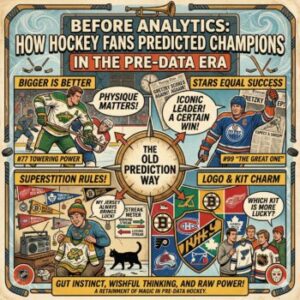
Bigger is Better
While it’s obvious that height and weight do hold some relevance in terms of a team’s dominance, they’re just a small part of how odds for the NHL are calculated today. But in a time before data took over, people were far more tuned into the size of hockey hotshots.
The rationale behind this is simple and obvious. The bigger team has the better chance of muscling their way to victory. Likewise, big players with a more physical play style simply look more commanding, even if they’re actually trumped in key statistics like goals scored or passes made.
Stars Equal Success
Star player power was another basis for predicting hockey team success back when the World Wide Web was just a glint in Tim Bernes-Lee’s eye.
Take the example of Wayne Gretzky, an undeniable all-timer. If he was on a team, people expected a win, even if there are many more moving parts involved in determining the likely outcome of a given game. His point-scoring prowess was enough to outweigh all other arguments.
Superstition Takes Precedent
Lots of us have superstitions, and sports fans in particular tend to be more likely than most to have a lucky item of clothing that they wear on game days to bring good luck. When data on team and player performance wasn’t available at the click of a mouse, predictions were far more influenced by wishful thinking rather than the reality of the situation.
For instance, many people were convinced that winning and losing streaks would determine the outcomes of future matches, as if the more games a team won or lost, the more likely it was for this trend to continue. It’s a very human fallacy to buy into, as we all think that sporting events should adhere to the same narrative rules as Hollywood movies.
Even entirely unrelated aspects, like a team’s logo or the colors of its kit, were held up by some as instrumental in determining whether it would have a good season or a bad one.
The Modern & The Mystic
While hockey fans might be able to call up in-depth stats and data to aid their predictions today, that doesn’t mean the magic has gone from the game. Instead, we’re in an appealing era when we can combine indisputable information with our inner desire to hope for unpredictable outcomes.
So, there’s a way for data-obsessed people to enjoy hockey, and still plenty of room for those who favor gut instinct and superstition over statistics.