Not every antique firearm carries the same weight in the collector market. Historic sporting firearms, from finely built shotguns to purpose-driven hunting rifles and field guns, occupy a category all their own. They sit at the intersection of craftsmanship, brand legacy, and cultural significance.
What makes this segment particularly interesting is the fixed supply. No one is producing new Victorian-era doubles or pre-war field guns. That scarcity, combined with deep appreciation for the gunmaker’s art, shapes a collector market with its own rules and rhythms. Understanding those dynamics is essential for anyone looking to collect, appraise, or simply appreciate these sporting guns at their true value.

How Estate Sales and Auctions Feed the Market
Most historic sporting firearms enter the collector market through estate liquidations. When inherited collections change hands, heirs often lack the background to assess what they hold. A side-by-side that sat in a gun cabinet for decades may carry significant market value that goes unrecognized without proper valuation.
At the top end, auction houses set the pace. Rock Island Auction has established itself as the leading venue for high-end antique firearms, with individual lots regularly reaching six figures. These events attract serious collectors and generate the price records that shape broader market expectations.
Below that tier, private sales and specialist dealer networks handle a steady volume of mid-range sporting pieces. Collectors looking to sell inherited firearms or thin out a collection often work through Cash for Arms, dedicated dealers, or peer-to-peer channels within collector communities.
What stands out about this market is its concentration. A relatively small number of auction events and specialist dealers account for the majority of notable transactions. That means timing, access, and relationships matter as much as the firearm itself when it comes to realizing full value on a sale or finding the right piece to acquire.
What Gives a Sporting Firearm Collector Value
Rarity sits at the top of every valuation conversation. Limited production runs, discontinued models, and maker-specific variants all command premiums that standard-issue firearms simply do not. A rifle produced in the thousands will rarely compete with one made in a batch of two hundred, especially when the manufacturer no longer exists.
Brand prestige amplifies that effect considerably. Names like Colt, Winchester, and Smith & Wesson anchor the broader collector market, but the shotgun niche follows its own hierarchy. British makers such as Purdey and Holland & Holland carry an outsized reputation built on generations of bespoke craftsmanship and royal patronage.
Then there is the matter of engraving and hand finishing. Factory-engraved pieces, completed under the original maker’s supervision, hold far greater market value than aftermarket embellishments added decades later. The quality of scrollwork, inlay, and stock carving speaks directly to a firearm’s place in the sporting heritage and collectibles tradition.
Provenance and historical significance create yet another tier entirely. A sporting gun owned by a notable figure or documented in a significant event transcends its mechanical qualities. It becomes an artifact with a story, and collectors consistently pay for that story.
What separates sporting firearms from military collectibles is where the emphasis falls. Battlefield association matters less here. Instead, field use, aesthetic quality, and the refinement of the maker’s craft carry the weight. A beautifully balanced side-by-side with documented lineage will often outperform a mass-produced military arm, even one with combat history, because the sporting market rewards artistry as much as age.
The Pre-1898 Line and Proving Authenticity
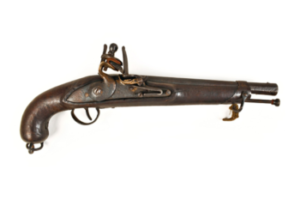
Federal law draws a firm line at 1898. Firearms manufactured before that date, including flintlock and muzzleloader designs, are classified as antique firearms and fall outside modern regulatory requirements. That classification has real consequences for the collector market, affecting how freely a piece can trade and what buyers are willing to pay.
A pre-1898 sporting arm can change hands without the federal licensing process that applies to modern firearms. That ease of transfer broadens the buyer pool and adds a layer of liquidity that post-1898 pieces do not enjoy. For collectors building or selling a collection, the distinction often translates directly into pricing.
Proving that a firearm actually meets the threshold, however, requires more than a visual estimate. Serial number research is typically the starting point, cross-referenced against manufacturer records and known production timelines. Maker’s marks, period-correct materials, and construction methods all factor into antique firearms authentication.
Provenance documentation strengthens a case considerably. Letters, photographs, original receipts, or catalog entries tying a piece to a specific time and owner add layers of confidence that physical inspection alone cannot provide. Certificates of authenticity from recognized experts or collector organizations carry measurable weight at resale, often justifying their cost many times over.
The risk of fakes and misattributed pieces is real, particularly with high-value Colt and Winchester models. Altered serial numbers, replaced parts passed off as original, and outright reproductions circulate in the market. Careful verification protects both the investment and the integrity of a collection.
Condition, Original Finish, and the Restoration Trap
After rarity, condition is the single most price-sensitive variable in the collector market. A few percentage points of original finish retention can separate a five-figure sale from a mid-range one. Collectors scrutinize every surface, and the market prices accordingly.
That scrutiny extends to what has been done to a firearm over its lifetime. The collector community overwhelmingly penalizes restoration. Refinished stocks, reblued barrels, and replaced parts reduce valuation even when the work is expertly executed. The logic is straightforward: original finish, including patina, case coloring, and honest period wear, is treated as part of the historical record itself.
Preservation, then, becomes the practical priority. Humidity control, proper casing, and avoiding bare-hand contact with metal surfaces are the standard methods collectors rely on to maintain condition without altering it. These practices protect a firearm’s market standing far more effectively than any refinishing job ever could.
There are narrow exceptions. Stabilization work to halt active rust or prevent structural deterioration is generally accepted within collector circles. Cosmetic restoration, on the other hand, almost never is. The market draws a clear line between saving a piece and improving its appearance, and crossing that line carries a measurable cost at resale.
A Market Shaped by Scarcity and Patience
The supply of historic sporting firearms only moves in one direction. Every piece lost to neglect, fire, or careless modification makes the survivors that much more scarce. No production run will ever replenish what time removes.
That reality rewards a particular kind of collector, one who values knowledge and patience over impulse. Understanding provenance, reading condition honestly, and knowing which market channels produce fair outcomes is what separates informed participants from speculative buyers chasing rarity alone. In a space defined by finite supply, expertise remains the most reliable advantage anyone can hold.