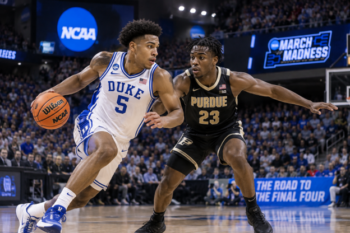
A look at the evolution of the NCAA College Basketball bracket

Every March, the NCAA tournament becomes a national discussion. Each upset seems personal in office pools, rivalries and on-line predictions. However, the men’s championship started with only eight teams. College basketball’s bracket history is one of growth and of a formula that introduced uncertainty to the fun. Readers interested in comparing college basketball odds can learn from its past as to why all seeds are always the subject of attention.

Humble beginnings: The first tournament in 1939

The inaugural NCAA men basketball championship was held in the year 1939, pitting only eight teams. Oregon beat Ohio State 46-33 in the finals at the Northwestern campus in Evanston, Illinois, to become the first champion. It was quite unlike the multiweek event that takes place today.

The more prestigious postseason event at the time was the National Invitation Tournament, which began in 1938. Being held at Madison Square Garden, New York, it had a large venue and initial exposure at a time when the NCAA tournament was still finding its identity. The NCAA championship slowly took a back seat as its field expanded.

The road to 64: Key expansions that shaped the modern tournament

The growth came in phases. The NCAA had to constantly change the format of the championship as college basketball grew and more conferences were interested in being represented. Every change brought in an extra competitor and increased the stakes of the decisions made. The bracket became a national championship with automatic qualifiers and committee selection.

From 16 to 32: The tournament finds its footing

Eight teams were increased to 16 teams in 1951. It expanded to 22 teams in 1953 and hovered around 22 – 25 for most of the next 20 years.

In 1975, the great leap was made to 32 teams. The expansion opened up the possibility of “at-large” selections for strong teams that didn’t win their conference tournament or championship. There was still a limit on the number of teams a conference could send, but the principle still applied; that a team could earn a berth without an automatic. The tournament got more popular, as the number of games increased and the tougher selection process was responsible for that.

1985: The birth of the modern 64-team bracket

In 1985, the tournament grew to 64 teams and an iconic event was born. Four regions of 16 made a clean structure, all teams must win 6 games to win the championship. The symmetry made the bracket easier to follow, reproduce and share; contributed to transforming bracket filling into a ritual.

The first 64-team contest provided an emblematic upset. In the final, defending champion Georgetown lost to eighth seeded Villanova, 66-64. The result illustrated the essence of the format; the ability for a lesser-known side to defeat a popular one in a single match. The bracket became more than just a schedule; it was a map of possible surprises.

Fine-tuning the madness: seeding, selection, and the 'First Four'

In 1978, the NCAA tried to seed teams in a limited system, and in 1979, with a 40-team field, every team was seeded within its region. Matchups are set up by seeds, and do not guarantee results. It’s the tension of ranking versus reality that is at the heart of March Madness.

There are two key pathways through which the Selection Committee constructs the field. Automatic qualifiers are those that qualify based on conference affiliation typically by winning the conference tournament. At-large teams are based on overall résumé (results, schedule strength and performance against quality opponents). The field and the seeds are revealed on Selection Sunday.

The field expanded to 65 teams with one more game in the opening round in 2001. It was expanded to 68 in 2011, where it was known as the ‘first four’ format, where the first four teams would compete in 4 games, with the winners advancing to the main bracket of 64 teams. These games are usually the lowest seeded automatic qualifiers and the final at-large selections.

There is a new chapter to be undertaken. The NCAA has decided to increase the men’s tournament to 76 teams starting in 2027. In the first round, 24 teams will fight for the 12 available spots in the 64-team field. So, 68 teams will still be the format until the 2026 tournament, but it won’t be where the bracket ends.

From sporting event to national obsession: The rise of 'Bracketology'

The tournament became a joint national spectacle with the advent of television. March Madness became big on television with CBS, as games and highlights were broadcasted into homes across the United States. Expanded play made it easier for fans to see teams they wouldn’t usually see and found some underdogs outside of their conferences.

Adding bracket pools made it even better. Fans are predicting what they believe is going to happen to the champion from round one, but one upset can throw later picks out of the game. Those predictions became friendly competition in office contests and online challenges, and today, social media allows fans to debate their picks as they make them.

“Bracketology” is the term used to refer to predicting the tournament field prior to Selection Sunday. ESPN analyst Joe Lunardi is more closely linked to popularizing the term by making his projections, which has made committee decisions into a season-long discussion. It’s not an exact science: things change, conference tournaments throw curve balls, and the committee takes several things into consideration.

That’s what the bracket has always been about, uncertainty. Its history indicates that it has been played in a variety of different ways, allowing more teams to be added, but keeping the tradition of sudden elimination. There will be the same analysis as well as the same hopeful bets and improbable runs as the field looks to grow in 2027. Before making predictions, take into account team form, matchups and every region’s route. If you’re a true sports fan and watch every game or just fill out one bracket every year, the evolution of the tournament provides an answer as to why March is so different from the rest of college basketball.

Please Share If You Liked This Article

Facebook
Twitter
LinkedIn
Reddit
Email

Get notified of new content, podcasts, and our awesome giveaways!!!!

    We respect your privacy. Unsubscribe at any time.

    More Posts From Sports History Network

    Leave a Comment