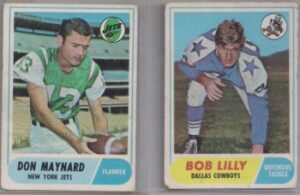
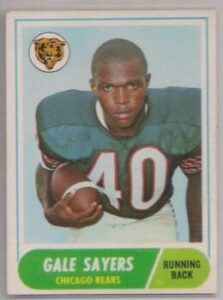

The first sports trading cards I remember collecting were the 1968 and 1969 Topps Football cards. I don’t remember who, but someone must have given me some because I wasn’t old enough to have money to buy them. I loved the colorful uniforms and team logos.
I also loved reading the backs of the cards, which offered a little information about the player on the front. They included the player’s stats, his height and weight, where he was from, which college he attended, and what he did for a living during the off-season. I not only learned a lot, but I also became a better reader.
The 1968 Topps set contained 219 cards and featured players from both the NFL and AFL. The only other years Topps featured AFL players were 1961 and 1969. Some cards had a rub-off cartoon on the back, while others could be assembled into a puzzle featuring Bart Starr and Len Dawson.
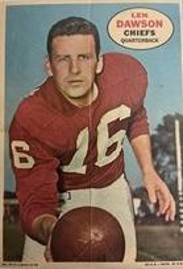
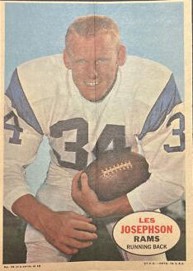
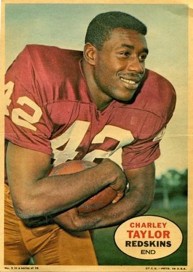
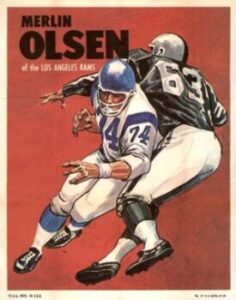
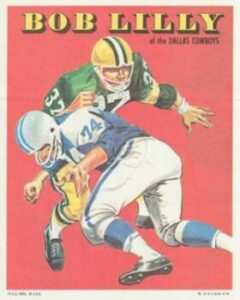
The best thing about the 1968 Topps cards was that some wax packs included a 5×7 mini-poster. Unfortunately, the poster set included only 16 players.
1968 TOPPS FOOTBALL CARDS
1968 TOPPS 5 x 7 MINI-POSTERS
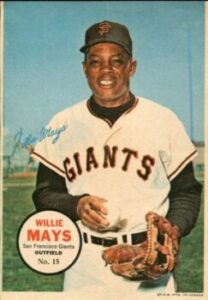
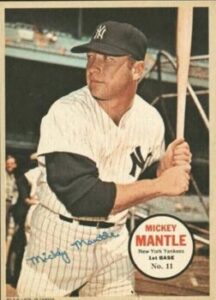
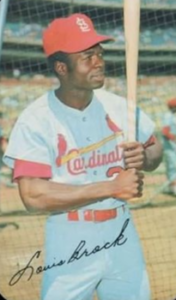
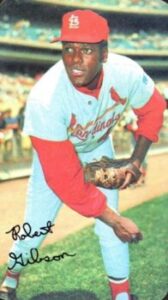
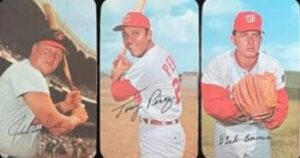
Topps made these same posters for baseball in 1967, also inserted into wax packs.
1967 TOPPS MINI-POSTERS
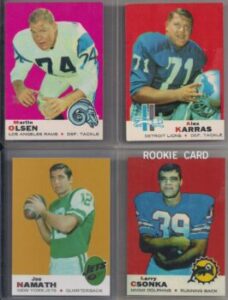
The 1969 Topps Football set contained 263 cards. These cards have always been among my favorites for their colorful backgrounds and imaginative team logos.
As with the 1968 set, some of these cards could be assembled into a puzzle; this time, the puzzle featured NY Giants quarterback Fran Tarkenton. A wax pack of twelve cards could be purchased for ten cents.
I was seven in 1969, and I had learned to keep an eye out for loose change. Sidewalks were always a good place to find dropped pennies, and occasionally you could find a dime in a phone booth. Couches and car seats were also good places to check for loose change. You might be wondering why I didn’t use my allowance money to buy sports cards.
The answer is that I didn’t get an allowance. My parents didn’t believe in giving one. My siblings and I were given chores, and we expected to do them. That’s how we learned to be responsible. Our reward came on our birthday and at Christmas.
1969 TOPPS FOOTBALL CARDS
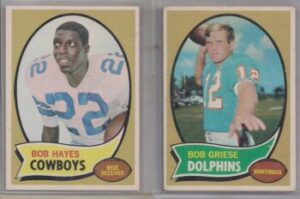
In my opinion, 1970 was the best year ever for card collecting. With the NFL/AFL merger, more fans were watching pro football than ever before, and Topps knew it. The 1970 Topps Football set contained 263 cards. The design was a bit dull compared with the 1968 and 1969 sets, but some cards featured a coin rub-off cartoon on the back, and many wax packs included exciting inserts.
1970 TOPPS FOOTBALL
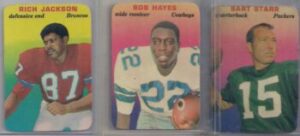
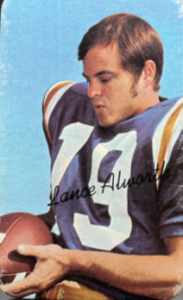
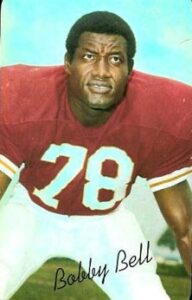
One of the inserts randomly included in wax packs was the very popular glossy cards. These were slightly smaller than the regular cards and came in a set of 33. Also randomly inserted were 8×10 folded posters, including 24 artist-drawn posters.
1970 GLOSSY INSERTS
1970 TOPPS 8 X 10 POSTER INSERTS
As if that wasn’t enough, Topps also produced Super Cards, which were much larger and thicker than regular cards. Each pack cost only a dime, but contained only three cards. The entire set had 35 cards. Topps also made these for baseball. The 1970 set had 42 cards, and the 1971 set had 63. I’m not sure why, but Topps didn’t make a 1971 football set.
1970 TOPPS SUPER CARDS
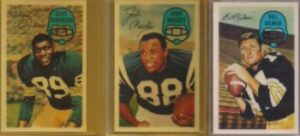
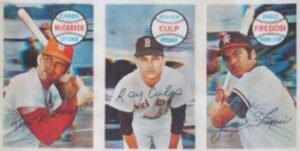
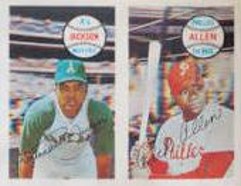
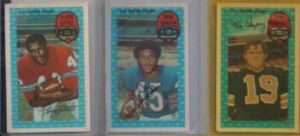
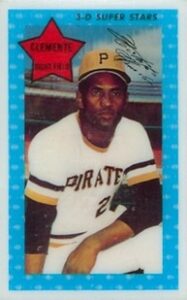
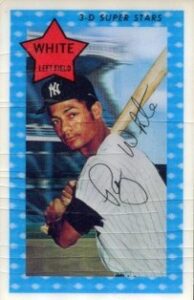
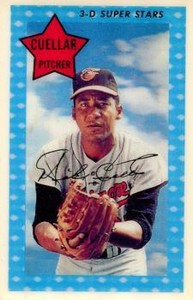
Kellogg’s got in on the act in 1970 with 3D cards. These cards came in cereal boxes. The football set had 60 cards, while the baseball set had 75 cards. Kellogg’s released another 60-card football set in 1971 and another 75-card baseball set.
The 1971 set is more valuable than the 1970 set because there was no box-top offer to purchase the entire set in 1971. You could only get the cards individually from cereal boxes. At only 8 years old, I had to convince my mother to buy more cereal for her hungry children. Kellogg’s continued making baseball sets into the early 1990s.
1970 KELLOGG'S 3D CARDS
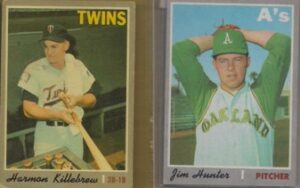
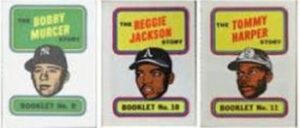
Back to 1970. The regular 1970 Topps Baseball set contained 720 cards. Biographical booklets were randomly inserted into the wax packs. There were 24 in total, and each biography was 6 pages long.
1970 TOPPS BASEBALL CARDS
1970 TOPPS BIOGRAPHY BOOKLETS
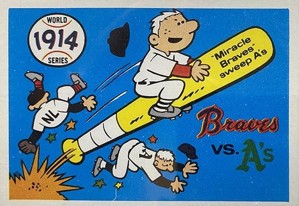
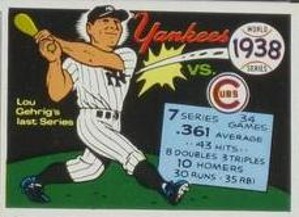
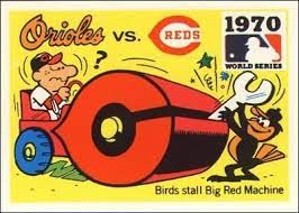
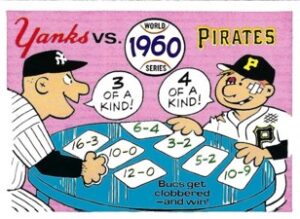
Fleer released a 66-card set of World Series Cartoon Cards. Sports artist R.G. Laughin did a terrific job on these cartoon-style cards, some of which would not go over well in today’s politically correct world. Each card featured a brief summary of that year’s World Series games on the back. These are among my favorite cards ever made.
WORLD SERIES CARTOON CARDS
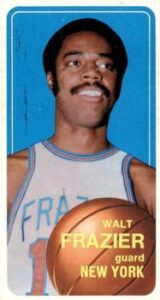
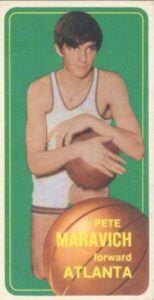
The first basketball cards I collected were 1970 Topps. They were larger than standard-size cards, but unlike the Super cards, which had thicker cardboard. I didn’t have many of these, but I had a lot of NY Knicks players, and I somehow had seven Pistol Pete Maravich rookie cards. As a New Jersey resident at the time, I was a big Knicks fan, but I also followed certain players from other teams.
Pete Maravich was one of those players. I don’t remember buying any basketball cards, so I’m not sure where I got them. My best guess is that I got them in a trade. The Maravich cards turned out to be quite valuable, and I sold six of the seven I had a few years ago.
1970 TOPPS BASKETBALL CARDS
Moving on to 1971. I ate plenty of Kellogg’s cereal in 1970 and 1971. It was a quick way to fill my stomach before heading off to school, and the more cereal I ate, the sooner I could get more 3D cards. I didn’t like Raisin Brand cereal, but thankfully, my sister did, so I convinced my mother to buy plenty of Kellogg’s Raisin Brand for my poor, hungry sister.
Whenever my sister said she was hungry, I suggested she have a bowl of Raisin Brand. It didn’t take long for my mother and sister to catch on to what I was doing.
1971 KELLOGG'S 3D CARDS
1971 TOPPS SUPER CARDS
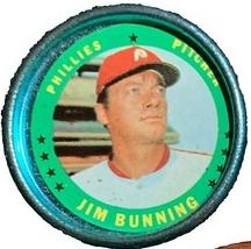
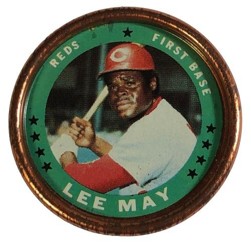
1971 was another good year for inserts. The baseball wax packs contained randomly inserted coins. There were 153 coins in the set, but for whatever reason, they were never highly sought after by collectors.
1971 TOPPS COINS
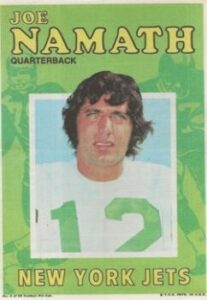
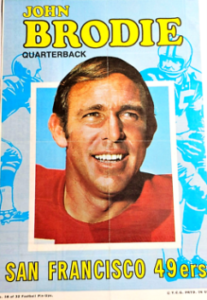
The 1971 Topps football wax packs included 4 ⅞ x 6 ⅞ posters inserted at random. There were 32 in the set, and the back of each poster featured a game.
1971 TOPPS POSTER INSERTS
Fleer released another set of World Series Cards. The concept was the same, but the cartoons were different.
1971 FLEER WORLD SERIES CARDS
Mark Morthier is the host of Yesterday’s Sports, a podcast dedicated to reliving memorable sports moments from his childhood days and beyond. He grew up in New Jersey just across from New York City, so many of his episodes revolve around the great sport’s teams of the 70s for the New York area.
He is also an author of No Nonsense, Old School Weight Training (Second Edition): A Guide for People with Limited Time and Running Wild: (Growing Up in the 1970s)
BOOKS BY MARK MORTHIER
Please Note – As an Amazon Associate I earn from qualifying purchases
More From Yesterday's Sports
Mark Morthier’s Favorite Sport Cards (1968 – 1971)
The first sports trading cards I remember collecting were the...
Read MoreReliving the 1975 Los Angeles Rams Season
The Cleveland Rams joined the NFL in 1937 and won...
Read More1970s Rivalry (Pittsburgh Steelers v. Dallas Cowboys)
The Pittsburgh Steelers, then known as the Pittsburgh Pirates, joined...
Read More1972/1973 NBA Champion New York Knicks – A Total Team Effort
After winning the NBA Championship in 1970, the Knicks returned...
Read More