Land on Kent McCloughan’s page on Pro Football Reference and it’s likely that you’d barely give it a glance before moving on.
Stay and you’ll see a six season career that had a brilliant start but disappointing finish. The two, first team All Pro honors will grab your eye but a look at the final three seasons of McCloughan’s career and it will have you wondering, what happened?
The fact is, McCloughan left a lasting mark on the NFL that I say extends to the present day.
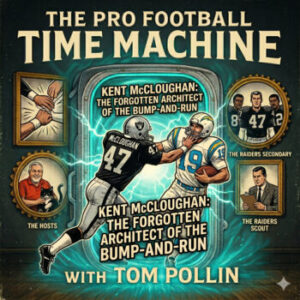
During McCloughan’s brief time in professional football, he stamped his name on what became known as “bump and run” pass coverage.
The Athleticism That Got McCloughan Noticed
Kent McCloughan began to demonstrate his outstanding athletic abilities in high school in Broken Bow, Nebraska. He was a two-way player on the gridiron at running back and safety.
As a running back he averaged 10 yards per carry and scored more than half his team’s points. As a safety McCloughan was a ballhawk who roamed sideline to sideline to make tackles.
When McCloughan wasn’t playing football, he kept busy setting the pace on the track team and leading his high school conference in scoring in basketball.
When it was time for college McCloughan stayed in state, enrolling at the University of Nebraska. His arrival coincided with Bob Devaney taking over as the Cornhusker’s head coach and the rise of the football program to a national powerhouse.
McCloughan continued his two-way play for the Cornhuskers, again playing halfback on offense and safety on defense. Despite a senior season where McCloughan led the nation in total touchdowns, he let it be known that he saw himself as a defensive back on the pro level.
The Oakland Sneaks in to Steal McCloughan for the Raiders
In the 1965 AFL Draft, the Houston Oilers grabbed McCloughan in the 11th round, 82nd overall, in an attempt to fix their AFL worst pass defense.
On the NFL side, in 1964, the Washington Redskins put the best safety tandem on the gridiron with Jim Stefan and Hall of Famer Paul Krause. They needed to be stronger at cornerback though. Washington picked McCloughan in the third round, 34th overall.
Unknown to both of those teams though was, the Oakland Raiders had already acquired McCloughan’s professional rights. After all, this was a time when teams were going behind each other’s backs to sign top players.
The early 1960s was a great era for players to sign for top dollar, even behind the backs of other, with two leagues vying for their services. After the AFL/NFL merger, the players wouldn’t find themselves in another advantageous negotiating position again until the start of free agency.
McCloughan’s Pro Football Career Starts with a Bang!
In 1965, McCloughan arrived in Oakland and started all games at left cornerback. On his right was Dave Grayson, a corner the Raiders acquired from the Kansas City Chiefs in exchange for Fred Williamson, yes that Fred Williamson, who became an actor and appeared in M*A*S*H and From Dusk Till Dawn, among many other movies and TV shows. Together, they formed one of the top lock down secondaries in the AFL.
In 1966, McCloughan and Grayson snared seven interceptions and made the Raiders defense the stingiest in the AFL in passing yards allowed.
For their efforts, both were named to the AFL Pro Bowl and earned postseason All Pro honors. McCloughan on the first team, Grayson on second team.
For the 1967 season, Hall of Fame cornerback Willie Brown joined the Raiders as the right cornerback opposite McCloughan while Grayson terrorized opposing receivers at free safety. With the two top flight corners locking down opposing passing games, Oakland finished third in passing yards allowed, second in interceptions and second in passer rating allowed, 47.9.
After three seasons in the AFL, Kent Mcloughan had established dominance over an AFL receiver group that included Otis Taylor, Don Maynard, Lance Alworth, Willie Frazier and many others.
One of the reasons for that dominance was the athletic ability that McCloughan brought to Oakland. The other is the innovation and mastery of the bump and run coverage technique.
So, who put the ram in the Rama-lama-dingdong?
Or more accurately, who put the bump in the bump and run?
As it turns out, the bump and run coverage technique hasn’t existed since the beginning of the passing game. For the longest time, defenders ran with receivers down the field without contact until approximately the late 1950s or the early 1960s, depending on which people you listen to.
Ask five of those people who invented bump and run coverage and you’ll get six different names.
One is Chicago Bears cornerback J.C. Caroline, who played in the late 1950s and early 1960s and made the Bears secondary a danger zone for receivers.
In Detroit you’ll hear tales of Hall of Fame defensive back Dick “Night Train” Lane, who played through the 1950s and early 1960s. He lived to separate receivers from the football.
How about San Francisco 49ers great Abe Woodson? Problem is, Woodson admitted that he didn’t start using bump and run until late in his career, in the early 1960s with the San Francisco 49ers and St. Louis Cardinals.
True, that isn’t six names but you get the point.
The Boston Celtics Contribution to Pass Coverage
The best bump-and-run origin story, and one that I believe is closest to the true story, comes from the work of a Hall of Famer. No, not Pro Football Hall of Famer. A Basketball Hall of Famer.
Before he moved on to the hardwood, K.C. Jones was a throwaway 30th round selection in the 1955 NFL Draft by the Los Angeles Rams.
In training camp, the 6-foot-1, 200 pound Jones started impressing coaches as a defensive back. How? By lining up directly in front of a receiver and, at the snap, used his basketball defense skills to push and hand-check that pass catcher off his route and out of the play.
When the receivers complained, Rams defensive backs coach Jack Faulkner did a thorough check of the rule book. What he found was nothing. There wasn’t anything in the rule book against what Jones was doing.
Jones played in two preseason games, grabbed one interception, but decided that football wasn’t for him. Boston Celtics fans will never forget Jones’ contributions to the team’s great championship teams of the 1960s. Faulkner never forgot him either.
In 1960, Faulkner made the move to the upstart AFL, becoming defensive backs coach for the Los Angeles Chargers, and he brought the bump-and-run technique to the new league with him.
The AFL Pass Defense Takes Hold
Former Raiders head coach John Madden always credited McCloughan with originating bump and run. As for McCloughan, he never took credit for inventing the technique but he did believe he was the first to use it regularly. After all, with all the stars who have been credited with using bump-and-run, no one had put their personal stamp on it.
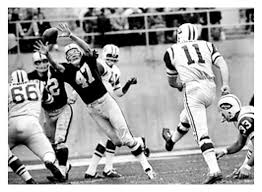
McCloughan had the athleticism to keep from getting beaten off the line of scrimmage. He was tougher than any receiver in the league and could easily body them off their routes. McCloughan also had track star speed to keep from getting beat deep if a receiver did slip past him.
Kent McCloughan took bump and run coverage and made it his own. As for Willie Brown, he admitted that he wasn’t using bump-and-run coverage while he was playing for Denver, but he learned it from the master, Broncos head coach Jack Faulkner
The Super Bowl bound Raiders squeezed opposing offenses to 2,165 passing yards and a 47.9 passer rating that season. Unfortunately for that Oakland defense, in Super Bowl II they ran into Bart Starr and a Green Bay Packers team that was ready to put their stamp on NFL history as the team that owned the 1960s.
The Isaac Curtis Rule
In 1968, McCloughan suffered a serious knee injury in a Week 10 game against the Denver Broncos.
Even with McCloughan sidelined with the knee injury that ultimately shortened his career, the Oakland pass defense continued at an elite level with Willie Brown and safeties Jack Tatum and George Atkinson continuing to wage war against opposing receivers.
Finally, after the 1973 season, the NFL said “Enough”!
In the Divisional Round of the playoffs, the defending Super Bowl Champion Miami Dolphins were set to play the Cincinnati Bengals.
Miami wasn’t worried about facing legendary head coach Paul Brown. After all, they had a legend of their own pacing the sidelines in Don Shula. The Dolphins also had their own Pro Bowl quarterback in Bob Griese to match up against Cincinnati hot shot Ken Anderson.
What they didn’t have was anyone who could match up with the Bengals world class speedster, wide receiver Isaac Curtis.
Shula had All Pro safeties Dick Anderson and Jake Scott push, bump and hold Curtis all game. The Bengals star finished the game with one catch for nine yards in a 34-16 win by Miami.
That offseason, Paul Brown pushed for what became known as, “The Isaac Curtis Rule”, against vehement opposition by Shula and the Dolphins.
The rule stated that contact with a wide receiver was only allowed once after he was three yards beyond the line of scrimmage. Brown’s argument for the rule was, what good is it for us to have performers if they aren’t allowed to perform.
The Isaac Curtis rule didn’t end the war between receivers and defensive backs though. Even though receivers were able to get off the line they were still taking punishment as they ran their routes or reaching to catch a pass.
The Mel Blount Rule
It became apparent to the NFL rules committee that they needed to do more to free up receivers from being roughed up downfield. Safeties, particularly Pittsburgh Steelers Hall of Famer Mel Blount, had the combination of strength and speed to harass and flatten receivers without getting beat deep.
Before the 1978 season, as the NFL prepared to expand to a 16 game season, they made a couple of moves to continue freeing up the passing game. They changed the definition of holding, allowing offensive linemen to extend their arms and open their hands while pass blocking.
The competition committee also passed what became known as “The Mel Blount Rule”. It restricted contact with receivers beyond five yards downfield. The rule didn’t restrict Blount’s ability to cover. He continued to amass multiple interceptions in every full season he played until his retirement after the 1983 season.
The result of the rule was astounding! In 1977, only running back Lydell Mitchell surpassed 70 receptions and only three receivers topped 800 receiving yards.
In 1978, reception totals barely moved the needle but receiving yards exploded. Four receivers topped 1,000 receiving yards while seven pass catchers surpassed an average of over 20 yards per reception.
As the NFL entered the 1980s, the running game began to take a backseat to the passing game in offenses as wide receivers celebrated the rules turn in their favor.
The passing game dominance continues to this day, although the running attack is returning to prominence over the past few seasons.
McCloughan’s Pro Football Playing Career Ends with a Whimper
After spending 1968 and 1969 playing limited games due to his injured knee, McCloughan played 13 games in 1970. He also set his single season high in interceptions with five.
In the offseason, the Raiders traded McCloughan and tackle Harry Schuh to the Los Angeles Rams for future Hall of Fame tackle Bob Brown and two draft picks. In July, McCloughan informed the Rams that he had decided to retire.
One question that can be asked about McCloughan is, if his career had continued on the same path as his first three seasons, could he have finished with a Hall of Fame caliber career?
According to Pro Football Reference, McCloughan’s player comps after three seasons included Hall of Famers Mel Renfro, Deion Sanders and Ed Reed. On that basis, it seems clear that McCloughan could have achieved enshrinement.
McCloughan’s Second Life as a Scout
In 1972, Oakland general manager, Hall of Fame executive Ron Wolfe, hired McCloughan as a scout and he excelled in that position the same way as he did on the field.
He found many talented players for Oakland over the years, including wide receiver Cliff Branch. During player reviews, McCloughan was the one the Raiders turned to for a final opinion.
The Final Word
As I stated at the top of this article, Kent McCloughan’s career is easy to overlook. He only played six seasons and the final three were a struggle. The Pro Football Hall of Fame will never come calling. Hell, they will never ask anyone directions to his house.
However, McCloughan left an unmistakable legacy. He developed and refined a coverage technique that left flattened receivers in its wake. Bump and run made him an All Pro and convinced a league full of defensive backs to make the coverage their own, revolutionizing pass defense.
That the NFL had to step in to allow receivers a bigger impact on the game led to a revolution on offense that continues to this day.
Both results are a hell of a legacy for a six year career!
Please Share If You Liked This Article
Please Note – As an Amazon Associate I earn from qualifying purchases
More Posts From Pro Football Time Machine
Bart Starr: The GOAT at Quarterback in Green Bay Packers History
The Green Bay Packers have an illustrious history of greatness...
Read MoreJohn Henry Johnson and the Million Dollar Backfield
Once, during a Super Bowl halftime interview, the legendary Jim...
Read MoreJim Finks: A Builder of Winners
Jim Finks could have spent his life as the answer...
Read MoreDropping Back: Chuck Noll, Pittsburgh’s Man of Steel
Chuck Noll agreed to do one ad during his 23...
Read More